
You’ve landed in Tokyo. It’s midnight. Your eSIM isn’t working. The provider’s support takes 48 hours to respond. You’re navigating a foreign city with no data, no maps, no way to contact your accommodation.
This happens more often than it should. The eSIM market has grown rapidly, and not all providers prioritize reliability over profits. Learning to spot the warning signs before you buy can save your trip.
Here are the red flags that indicate an eSIM provider might leave you stranded — and what to look for instead.
? Red Flag #1: “Unlimited” with hidden limits
The word “unlimited” in eSIM marketing is often misleading. What many providers actually mean:
The reality: You get high-speed data up to a certain threshold (often 500MB, 1GB, or 2GB per day). After that, speeds throttle to 128kbps or 256kbps — technically “unlimited” but practically unusable for anything beyond basic messaging.
What to look for: Clear disclosure of any fair use policies, throttling thresholds, and post-limit speeds. If a provider buries this in fine print or doesn’t mention it at all, they’re hoping you won’t notice until it’s too late.
✅ The IbiPoint approach: IbiPoint Unlimited Flex clearly states your daily high-speed allowance (500MB, 1GB, 2GB, or 3GB per day) and what happens after — unlimited data continues at reduced speed. No surprises, no hidden terms. You know exactly what you’re buying, and you choose the daily allowance that fits your needs.
? Red Flag #2: No way to check your remaining data
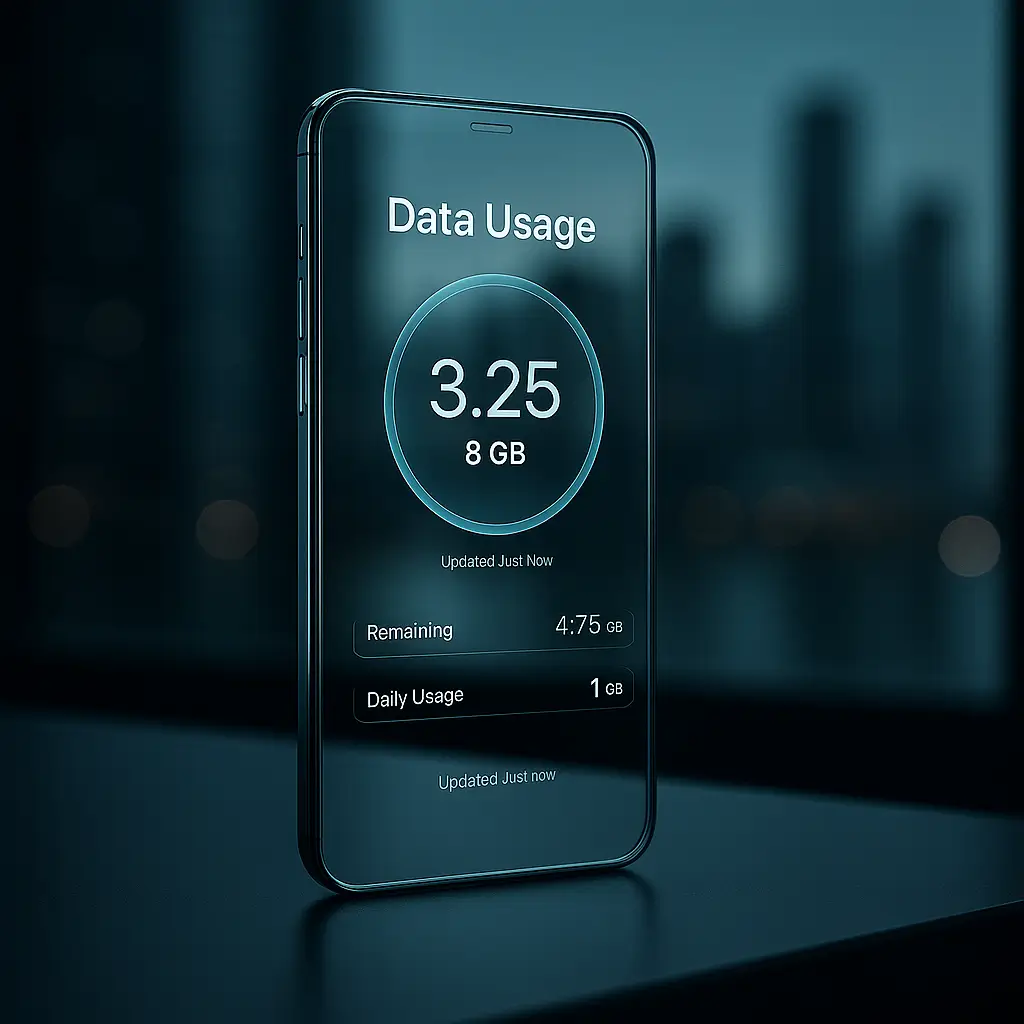
This one is surprisingly common and deeply frustrating. You purchase a data plan, use it for several days, and have absolutely no way to know how much you’ve consumed or what’s left.
Why this matters: Without usage visibility, you can’t pace yourself. You might run out unexpectedly at the worst moment, or you might over-restrict yourself and waste data you’ve paid for.
What to expect: Good providers offer real-time usage tracking — a simple way to see exactly how much data remains. This should be accessible anytime, from any device, without jumping through hoops.
✅ The IbiPoint approach: Every IbiPoint eSIM comes with an IbiPoint Transparency link in your delivery email. One click shows your real-time data usage, remaining allowance, and plan status — accessible from any device, anywhere in the world. No app download required. No account login. Just instant clarity.
? Red Flag #3: Activation starts immediately
Some eSIM plans start counting validity the moment you purchase or install them — not when you actually start using them at your destination.
The problem: You buy a 7-day plan a week before your trip for convenience. By the time you land, half your validity has already expired. You’re paying for days you couldn’t possibly use.
What to look for: Plans that activate on first network connection at your destination. This lets you install days or weeks ahead without wasting validity.
✅ The IbiPoint approach: Every IbiPoint plan clearly offers the choice: “Activate now or wait until you need it.” Install your eSIM at home with reliable WiFi, and it sits ready but inactive. Validity only begins counting when you connect to a network at your destination. Your 7-day plan gives you 7 full days of travel — not 7 days minus your preparation time.
? Red Flag #4: Complicated installation process
eSIM installation should take about two minutes. Scan a QR code or tap an installation link. Done.
Warning signs:
— Requiring you to manually enter long activation codes
— Needing to download a separate app just to install
— Multiple confusing steps with technical jargon
— Instructions that differ significantly from standard eSIM installation
Why it matters: Complicated installation suggests outdated systems or poor attention to user experience. If they can’t make installation smooth, what else might be difficult?
✅ The IbiPoint approach: Scan the QR code from your email, or tap the direct installation link on compatible devices. That’s it. Clear instructions for iPhone and Android included. Most customers complete installation in under two minutes — at home, with WiFi, without stress.
? Red Flag #5: Support that’s impossible to reach
When your eSIM doesn’t work in a foreign country, support response time isn’t a nice-to-have — it’s critical.
Red flags:
— Email-only support with 24-48 hour response times
— Support hours that don’t match when you’ll actually be traveling
— No clear contact information on the website
— Automated responses without actual human help
— Language barriers when explaining technical issues
What good support looks like: Multiple contact channels. Fast response times measured in minutes, not days. Available during hours relevant to your destination. Real humans who understand eSIM technology.
✅ The IbiPoint approach: IbiPoint Support responds quickly with real human help. Accessible via the support portal, designed to solve problems fast — not make you wait while you’re stranded abroad.
? Red Flag #6: Prices without context
A plan costs €8 for 3GB in Thailand. Is that good? Bad? You have no idea because the price exists in a vacuum.
The problem: Mobile data costs vary dramatically by country. Thailand has cheap local data; Japan is expensive. Without context, you can’t tell if you’re getting fair value or being overcharged.
What to look for: Providers who help you understand whether a price represents good value for your specific destination — not just a number without meaning.
✅ The IbiPoint approach: The IbiPoint Data Rating shows you exactly where each plan sits in terms of value. Based on price per GB and destination context, the Data Rating tells you whether you’re getting excellent, good, or fair value — before you buy. No more guessing. No more overpaying without realizing it.
? Red Flag #7: No way to add more data
You estimated 5GB would be enough. You were wrong. Now you’re stuck with a dead eSIM and no way to continue without buying a completely new plan.
The problem: Many providers treat each purchase as final. Run out of data, and your only option is starting over with a new eSIM — new installation, new cost, lost convenience.
What to look for: Easy top-up options that let you add data to your existing eSIM without starting from scratch.
✅ The IbiPoint approach: IbiPoint TopUp lets you add more data to your existing eSIM instantly. Running low? A few clicks and you’re back online — no new installation, no hassle. Your eSIM continues working seamlessly with the additional data.
? Red Flag #8: Rigid, unfriendly refund policies
Things go wrong. Plans don’t suit trips. Destinations change. A reasonable refund policy demonstrates provider confidence in their product.
Warning signs:
— “No refunds under any circumstances”
— Refund processes that require extensive documentation
— Terms that make refunds practically impossible
— No clear policy stated anywhere
What good policies look like: Clear, fair terms. Refunds for unused eSIMs. Willingness to make things right when problems occur.
✅ The IbiPoint approach: IbiPoint offers a 14-day money-back guarantee for non-activated eSIMs. Changed your plans? Destination shifted? No problem. If you haven’t activated your eSIM, you’re fully protected. We’re confident in our product — and we want you to be confident in your purchase.
The pattern to recognize
Notice what these red flags have in common: lack of transparency.
Providers who hide information, complicate processes, or make it difficult to understand what you’re buying are optimizing for their benefit, not yours. They’re hoping you won’t ask questions until after you’ve paid.
Trustworthy providers do the opposite. They make information clear, processes simple, and support accessible — because they have nothing to hide and want customers who return.
Frequently asked questions
Are unlimited eSIM plans actually unlimited?
Often not. Many “unlimited” plans throttle speeds dramatically after a certain data threshold. Look for plans like IbiPoint Unlimited Flex that clearly state your daily high-speed allowance and what happens after — complete transparency, no surprises.
Why can’t I check my remaining eSIM data?
Some providers don’t offer usage tracking, leaving you guessing. Reliable providers include transparency tools — IbiPoint sends an IbiPoint Transparency link in every delivery email, showing your real-time data usage from any device, anywhere.
What should I do if my eSIM doesn’t work abroad?
First, ensure data roaming is enabled for the eSIM and airplane mode is toggled off. Restart your phone. Check if you’re in a coverage area. If issues persist, contact support immediately. Good providers respond quickly and offer guarantees — IbiPoint provides a 14-day money-back guarantee for non-activated eSIMs.
Why is my eSIM so slow even though I have data left?
You may have hit a hidden throttling threshold, or your provider uses low-quality network partnerships. Quality providers are upfront about speed policies. With IbiPoint Unlimited Flex, you always know your daily high-speed allowance and can monitor usage via your Transparency link.
Can I get a refund if my eSIM doesn’t work?
Policies vary dramatically. Some providers offer no refunds once delivered. IbiPoint offers a 14-day money-back guarantee for non-activated eSIMs — if your plans change or it doesn’t work for you, you’re protected.
Choose with confidence
Travel should be exciting, not stressful. Connectivity should be invisible — working reliably so you can focus on your destination, not your data plan.
By recognizing these red flags before you buy, you protect yourself from providers who prioritize profit over experience. Look for transparency, flexibility, and honest communication. These qualities indicate a provider who wants to earn your trust, not exploit your urgency.
Your trip deserves connectivity that just works.
Questions about finding the right eSIM for your trip? IbiPoint Support provides honest answers — no pressure, just help.